
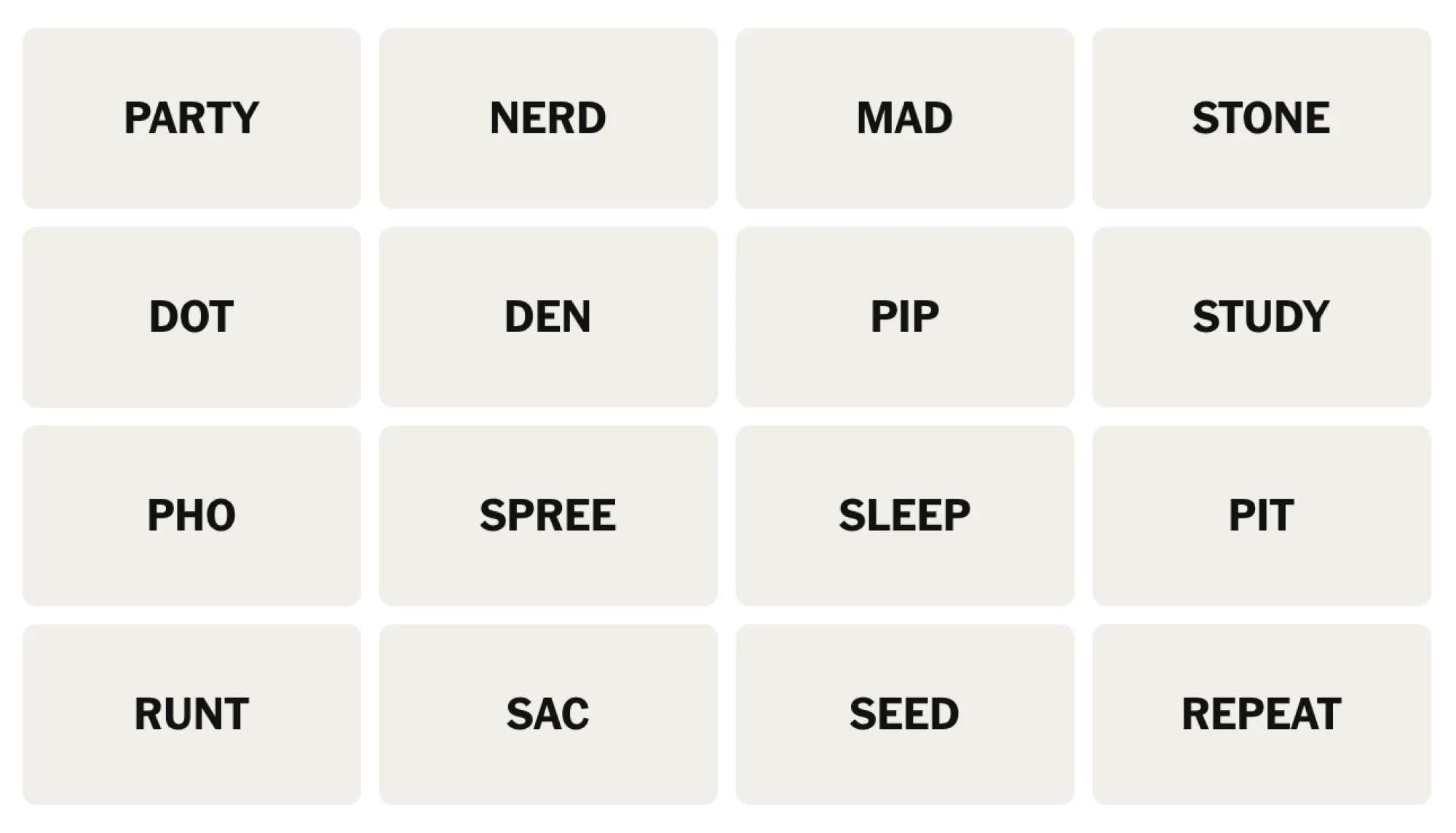
Every now and then, NYT Connections delivers a puzzle that feels completely manageable at first glance—until you discover that nearly every word could belong somewhere else. The July 12 puzzle (#1127) is a perfect example of that design philosophy.
Instead of relying on obscure vocabulary, today’s challenge tested something much more important: pattern recognition. Many of the words were familiar, yet identifying the correct relationships required players to think beyond their first instinct. The result was a puzzle that rewarded patience, flexible thinking, and careful observation.
If today’s grid left you scratching your head, you’re certainly not alone. Here’s a closer look at what made this puzzle one of the trickier Connections challenges in recent days.
A Puzzle Built Around Misdirection
One of the strengths of Connections is its ability to make ordinary words seem connected in multiple ways. Today’s puzzle demonstrated that perfectly.
Several entries immediately suggested familiar themes such as fruit, studying, food, and places. Those obvious ideas weren’t entirely wrong—but they weren’t always enough to solve the categories.
Instead of asking, “What do these words mean?” today’s puzzle often asked, “What else could these words represent?”
That subtle shift is what separated successful solvers from those who ran out of guesses.
Today’s NYT Connections Puzzle Word List (July 12, Puzzle #1127)
Before diving into today’s July 12 hints and analysis, take a careful look at all 16 words from the puzzle. Sometimes simply reading through the entire grid a second time can reveal patterns that weren’t obvious at first.
Today’s words are:
- Dot
- Den
- Mad
- Nerd
- Party
- Pho
- Pip
- Pit
- Repeat
- Runt
- Sac
- Seed
- Sleep
- Spree
- Stone
- Study
At first glance, this collection feels intentionally misleading. Some words appear to belong to food-related themes, while others suggest education, geography, emotions, or everyday activities. That’s exactly what makes today’s puzzle so engaging.
A few examples of the puzzle’s clever misdirection include:
- Pho immediately makes many players think of the popular Vietnamese noodle soup, but that’s not the connection the puzzle is looking for.
- Party, Sleep, and Study look like everyday activities, yet they become much more meaningful when viewed together.
- Pit, Seed, Stone, and Pip all relate to fruit, but they aren’t terms people typically use interchangeably in daily conversation.
- Dot, Nerd, Runt, and Spree seem completely unrelated until you recognize a shared cultural connection.
Before scrolling to the category analysis or answers, spend a few minutes looking for possible groups. The best Connections puzzles reward patience, and today’s grid is a great example of how obvious-looking words can hide surprisingly creative relationships.
The Yellow Group: Familiar Words With Different Names
The yellow category focused on the reproductive parts found inside fruits. While words like pit, seed, and stone are commonly recognized, the inclusion of pip made this group slightly less obvious.
Many people use “seed” as a catch-all term for the inside of fruit, but in everyday conversation, words such as pit, stone, and pip are used for different types of fruits. Recognizing that broader botanical relationship helped complete the category.
This was a reminder that Connections often rewards general knowledge without requiring specialized expertise.
The Blue Group: A Phrase Hidden in Plain Sight
The blue category looked surprisingly simple once revealed, but spotting it during the game was another matter.
The four words formed a sequence that many students know by heart:
- Party
- Sleep
- Study
- Repeat
Rather than being synonyms, these words work together as part of a familiar lifestyle slogan. It’s an example of how Connections sometimes builds categories around expressions instead of direct definitions.
If you were looking only for words with similar meanings, this connection could easily have been overlooked.
The Green Group: Candy Instead of Fruit
Perhaps the biggest surprise came from the green category.
At first glance, names like Dot, Nerd, Runt, and Spree don’t appear connected unless you’re familiar with classic candy brands.
This category demonstrates one of the puzzle’s favorite tricks: using ordinary English words that also happen to be product names.
Many players likely associated Spree with shopping or excitement, Dot with punctuation, Runt with the smallest animal in a litter, and Nerd with personality traits. Until you recognize the candy theme, these words seem completely unrelated.
That clever layer of ambiguity made this one of the day’s strongest categories.
The Purple Group: Geography Disguised as Everyday Words
The purple category was arguably the highlight of the puzzle.
Rather than asking players to identify cities directly, the puzzle used the beginnings of several U.S. state capitals:
- DEN → Denver
- MAD → Madison
- PHO → Phoenix
- SAC → Sacramento
At first glance, words like Mad, Pho, and Sac seem unrelated. One looks like an emotion, another is a famous Vietnamese noodle soup, and another appears incomplete.
Only after noticing that each can begin the name of a state capital does the hidden pattern become clear.
This type of layered wordplay is exactly what makes the purple category the most anticipated part of every Connections puzzle.
The Biggest Red Herrings
Every Connections puzzle includes distractions, and today’s grid offered several convincing ones.
For example:
- Pho naturally makes many players think of food.
- Seed, Pit, and Stone all suggest gardening or cooking.
- Study and Sleep can appear connected as parts of daily routines.
- Mad feels like an emotion rather than a place name.
These false leads encourage players to make quick assumptions, which is exactly what Connections is designed to challenge.
The key is resisting the urge to lock in a category before you’ve considered every possibility.
Difficulty Breakdown
🟨 Yellow – Easy to Moderate
Most players recognized three of the four words quickly, but pip added just enough uncertainty to slow things down.
🟦 Blue – Moderate
The words themselves are simple, yet recognizing the phrase rather than a category required a different way of thinking.
🟩 Green – Challenging
Unless you immediately recognized the candy brands, this category probably remained hidden until late in the puzzle.
🟪 Purple – Very Challenging
The state-capital wordplay demanded both geographical knowledge and a willingness to look beyond each word’s most common meaning.
What Today’s Puzzle Teaches
One of the best lessons from today’s puzzle is that Connections isn’t only a vocabulary game.
It’s equally a game about:
- Recognizing patterns
- Ignoring misleading first impressions
- Thinking laterally
- Looking at spelling as well as meaning
- Staying patient when several answers seem possible
Experienced players often solve difficult puzzles not because they know more words, but because they pause before committing to a category.
Tips for Future Connections Puzzles
If today’s challenge proved difficult, these habits can improve your results over time:
- Start with the clearest category instead of forcing difficult ones.
- Read every word more than once before making your first guess.
- Consider brand names, locations, and pop culture references.
- Look for prefixes, abbreviations, or partial words.
- If a category almost fits, ask yourself whether there’s another explanation that connects the words more naturally.
Many of the hardest Connections puzzles reward careful observation more than speed.
Final Thoughts
The July 12 Connections puzzle stands out because it balanced accessible vocabulary with clever misdirection. None of the individual words were especially obscure, but the relationships between them required players to think creatively and reconsider their initial assumptions.
The fruit terminology, college-life phrase, candy names, and hidden state capitals each tested a different kind of knowledge, creating a satisfying mix of language, culture, and logic.
Whether you solved it in a few minutes or used all four guesses, today’s puzzle is a reminder of why Connections has become such a popular daily brain teaser. It’s not just about finding matching words—it’s about discovering the unexpected links hiding in plain sight.
How did today’s puzzle go for you? Did the candy category catch you off guard, or was the hidden geography the toughest challenge? However you approached it, every difficult puzzle offers a chance to sharpen your pattern-recognition skills for tomorrow’s game.
